


Learning from Food and Agriculture: 2026 Hawaiʻi Study Tour Report
TUFS Featured
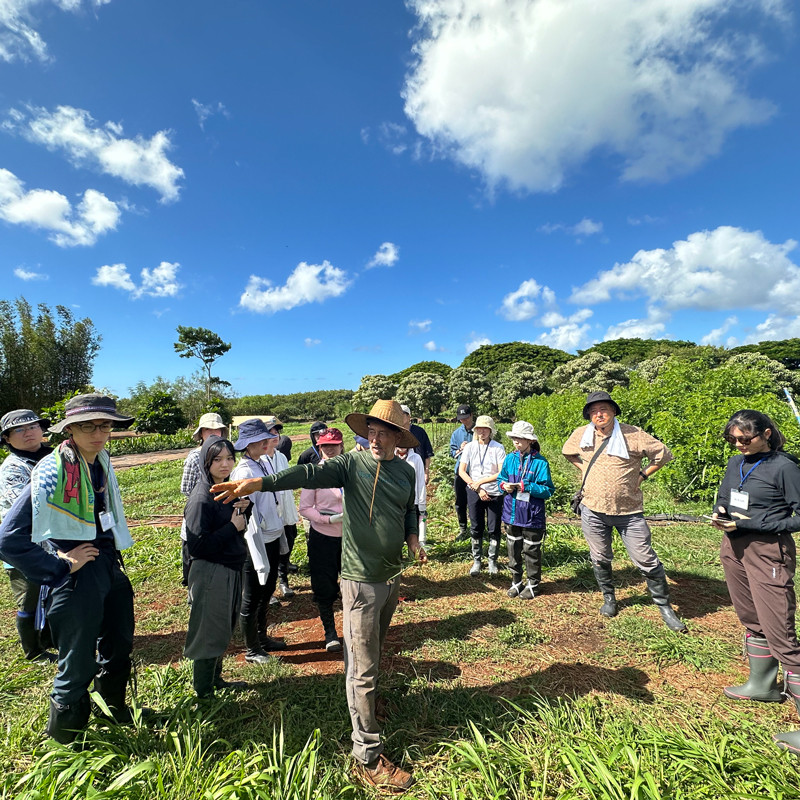
From September 2 to 8, 2026, Tokyo University of Foreign Studies (TUFS) conducted the 2026 Hawaiʻi Study Tour on the island of Oʻahu, Hawaiʻi.
TUFS is engaged in interdisciplinary research bridging the humanities and sciences in collaboration with Tokyo University of Agriculture and Technology (TUAT) under the Program for Forming Japan’s Peak Research Universities (J-PEAKS). The study tour was planned and organized primarily by faculty members participating in the TUFS J-PEAKS research project, “Understanding the Past and Present of Land and Water Use in Hawaiʻi through Kalo and Rice Cultivation: Colonial Legacies and the Potential for Farmland Restoration,” together with the Center for Transdisciplinary Research, Networking and Dialogue (TReND Center) and the TUFS Training Program for Trans-Pacific Bridge Persons (TP-Bridge) under the Inter-University Exchange Project.
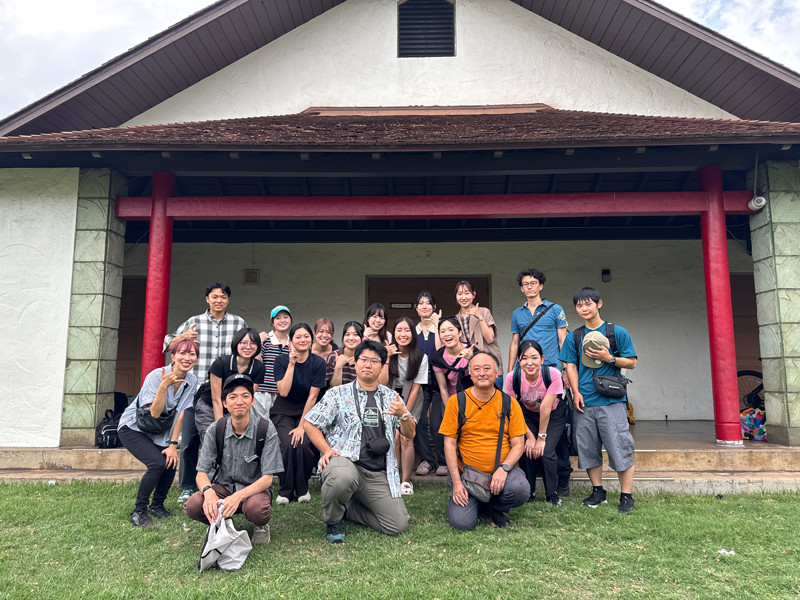
A total of 14 students and four faculty members participated in the tour. Using ahupuaʻa, the traditional Hawaiian system connecting land, water, and ecosystems from the mountains to the sea, as a key framework, participants explored Hawaiian culture and society, agriculture, food, Native Hawaiian rights, colonialism, and sustainability through lectures and fieldwork.
Preparatory Learning | Developing Individual Questions before Going to Hawaiʻi
Before departure, participants took part in three preparatory learning sessions.
They learned about land, water, agriculture, and multicultural society in Hawaiʻi; agriculture in island environments; the overthrow of the Hawaiian Kingdom; and Hawaiian Homesteads. Students also reflected on what they wanted to observe and explore in Hawaiʻi and developed their own questions to pursue during the study tour.
The preparatory lectures were delivered by Junior Lecturer Keaki Matsudaira of TUFS, Professor Sachiho Arai of Tokyo University of Agriculture and Technology, and Associate Professor Masaya Shijo of Kanto Gakuin University.
Day 1 | Learning about Land, Water, and Food at the University of Hawaiʻi at Mānoa
After arriving in Hawaiʻi, the group visited the University of Hawaiʻi at Mānoa.
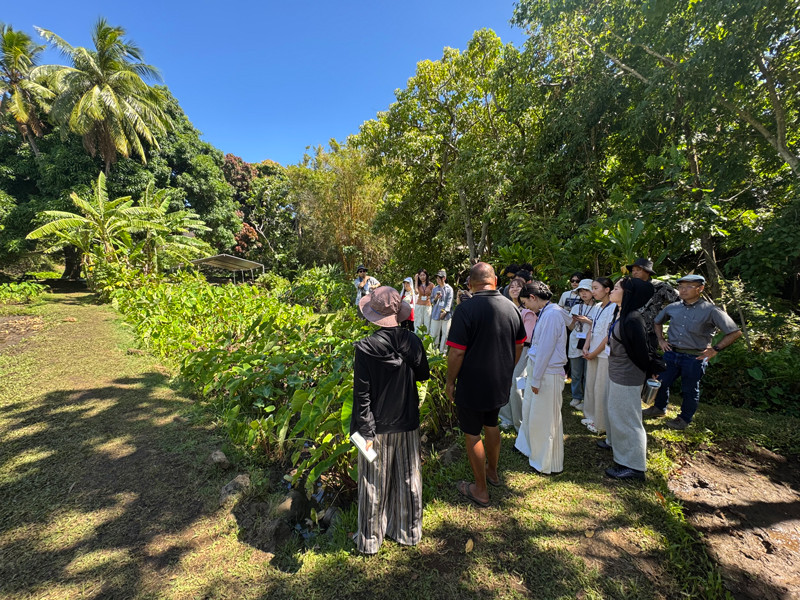
At the Kamakakūokalani Center for Hawaiian Studies, participants visited kalo (taro) fields and Mānoa Stream.
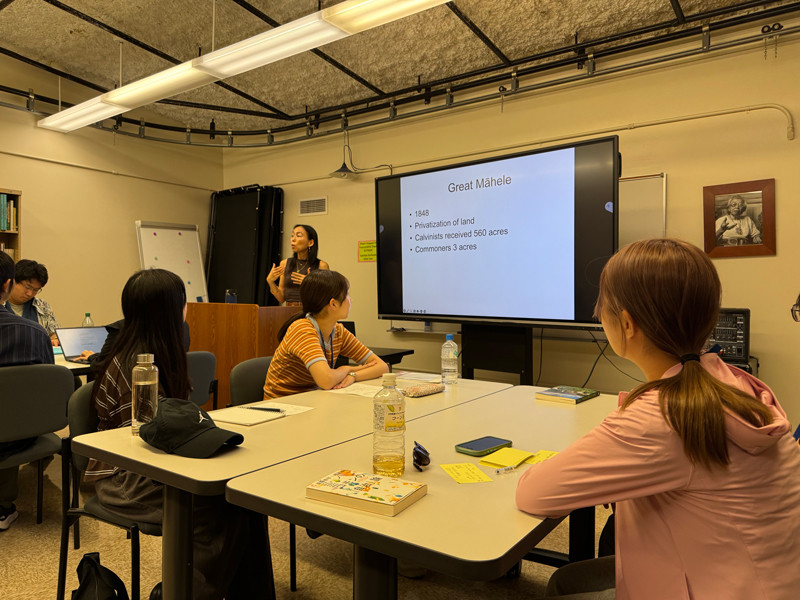
They then attended a lecture by sociology doctoral student Madison Owens on water contamination in Hawaiʻi associated with U.S. military facilities and the social movements that have emerged in response. Professor Aya Kimura gave a lecture on food sustainability and inequality in Hawaiʻi. In particular, students learned about the problem of solutionism and gained a perspective that encouraged them not to reduce social issues to simple technological or market-based solutions, but instead to understand them in their structural and historical contexts. This broadened the lens through which they approached the remainder of the study tour. The lectures also helped students understand that issues surrounding land and water are deeply connected not only to the environment, but also to colonialism, militarization, and social inequality.
Day 2 | Exploring Connections between Culture and Industry through Kalo and Poi
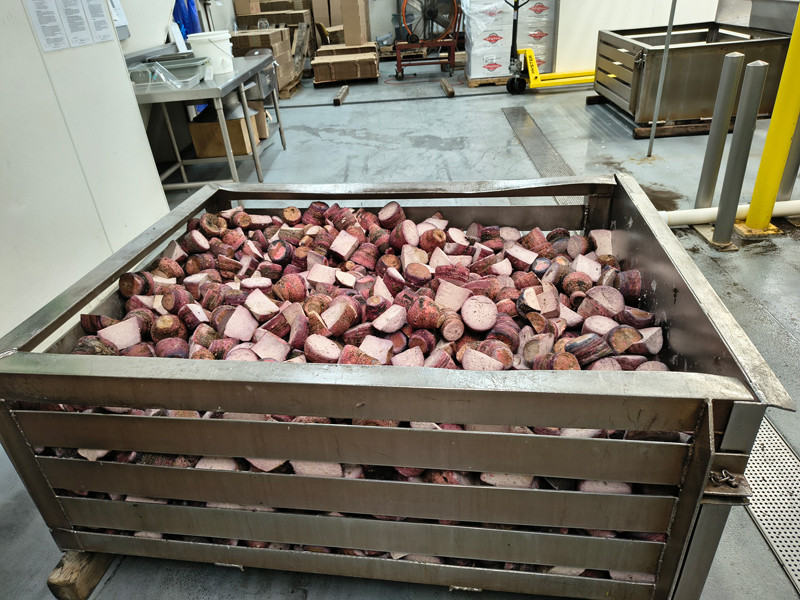
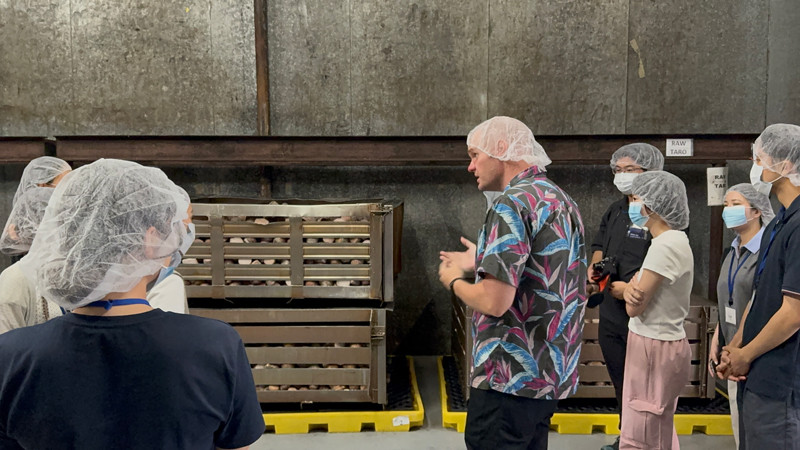
On the second day, the group visited Taro Brand Company, a food-processing company, where students learned about the mechanized production of poi, a Native Hawaiian staple traditionally made by pounding cooked kalo with water.
Through a presentation and factory tour, participants learned how poi, a traditional Hawaiian food, is commercially produced today while continuing to be passed on to future generations.
Day 3 | Learning from the Land: Agriculture and Culture
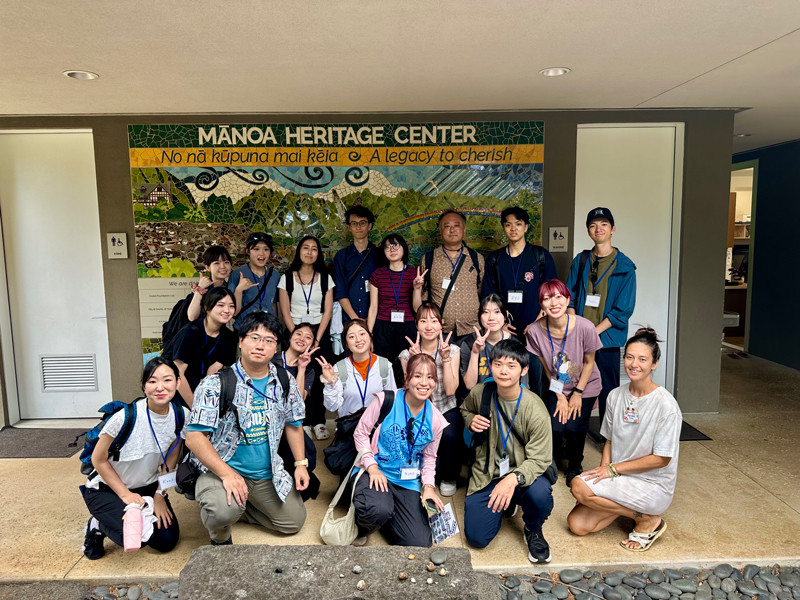
At the Mānoa Heritage Center, students learned about the relationships between plants traditionally used in Hawaiʻi and people’s everyday lives and culture.
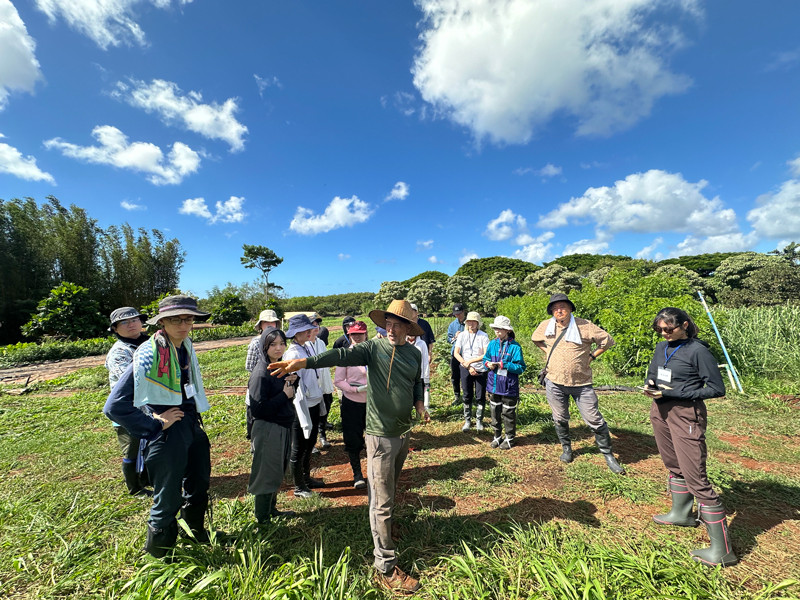
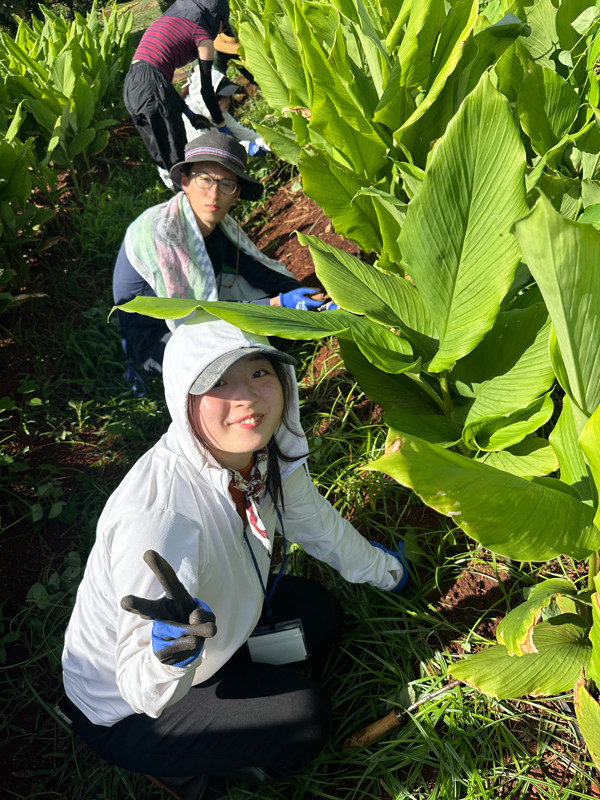
At Mohala Farms, the students learned about the farm’s long-term efforts to restore soil on land that had previously been used for plantation agriculture. After receiving an introduction to organic farming and farm management, the students took part in weeding and learned through hands-on activities, including making lei from ti leaves.
Day 4 | Working alongside the Community in the Loʻi Kalo
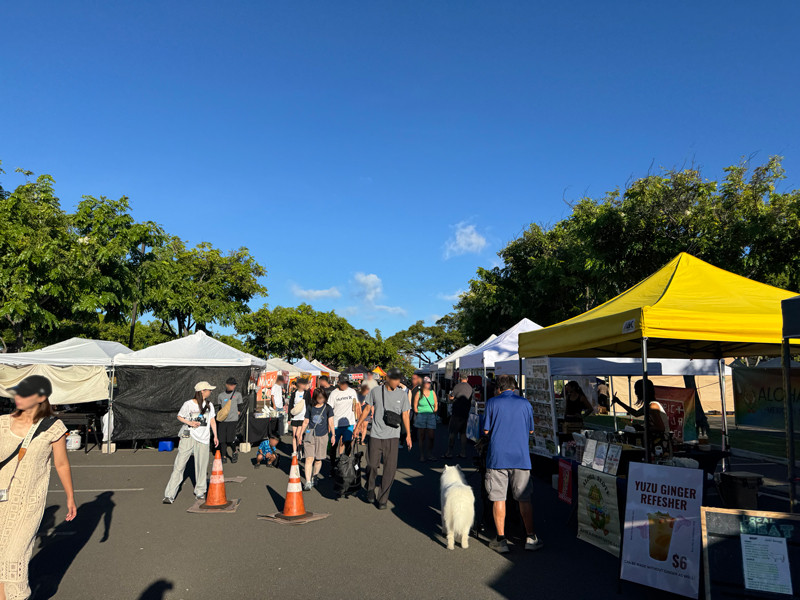
Early in the morning, participants visited a farmers’ market, where they examined the types and prices of locally produced agricultural products and processed foods and considered the relationship between agriculture and consumption in Hawaiʻi.
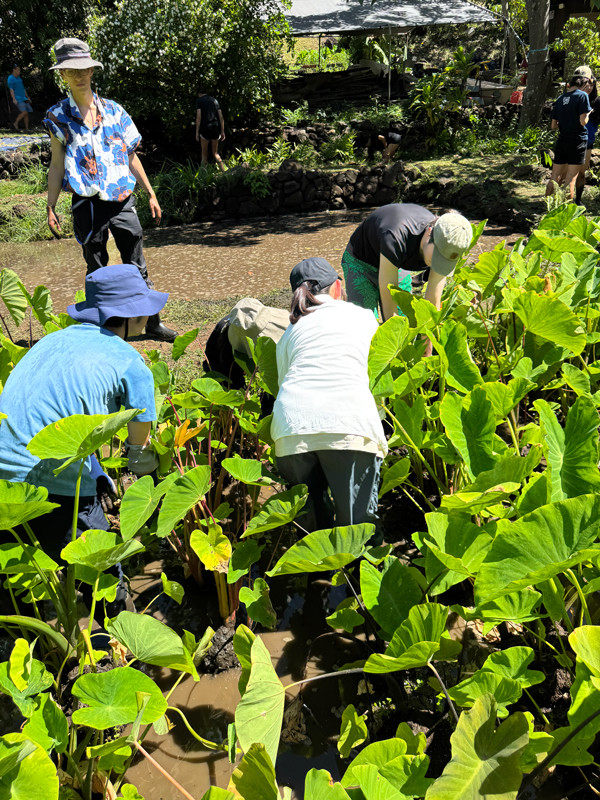
Later, at Ka Papa Loʻi ʻo Kānewai at the University of Hawaiʻi at Mānoa, the group participated in the First Saturday Community Work Day.
Together with UH Mānoa students and community members, participants worked in loʻi kalo (irrigated kalo fields) and learned through hands-on experience about the connections among kalo cultivation, land, water, and community.
Day 5 | Understanding Ahupuaʻa from Mountains to Sea
The group visited Heʻeia Fishpond, where they attended a lecture by Dr. Ulla Hasager of the University of Hawaiʻi at Mānoa. Students learned about changes in water use brought about by sugar plantations, sea-level rise associated with climate change, and the history of Native Hawaiian fishing practices.
In ahupuaʻa such as Heʻeia, water flowing from the mountains toward the sea carried nutrients from upstream areas, including loʻi kalo, into coastal fishponds, helping to sustain fish production. By considering the history of land and water not only through kalo and loʻi but also through the ocean and fishponds, students further deepened their understanding of ahupuaʻa as an interconnected system extending from the mountains to the sea.
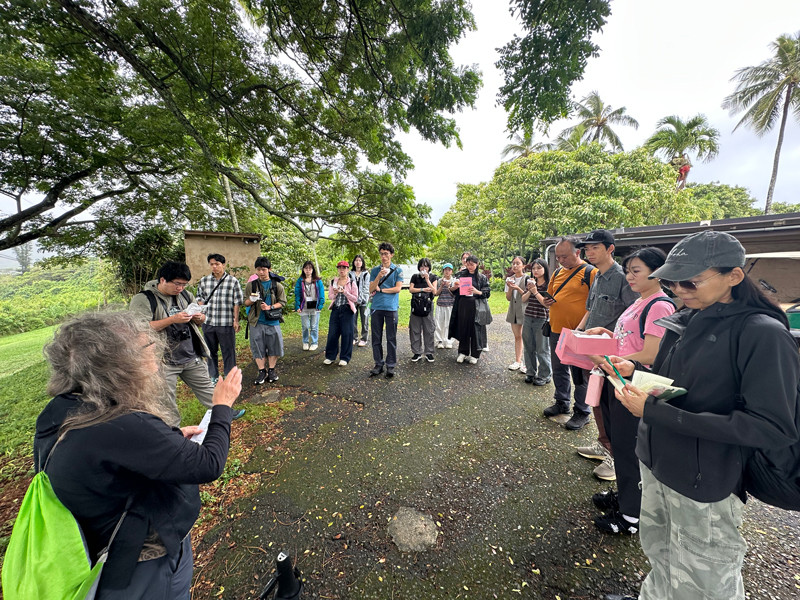
Afterward, the group held a reflection session at the Church of the Crossroads. The church was the first in Hawaiʻi to be founded by young people with the explicit aim of transcending racial and ethnic divisions, and it continues to engage with issues of peace, social justice, and environmental justice.
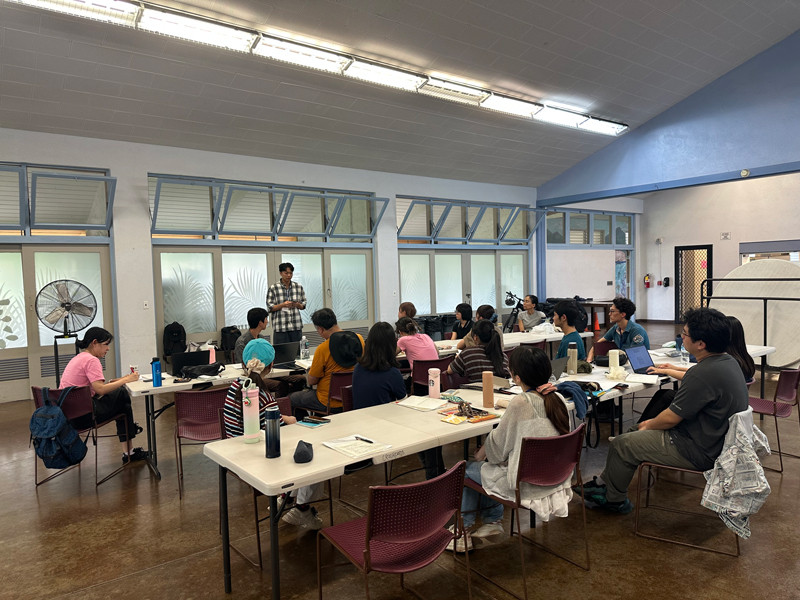
Students first discussed in groups what had made the strongest impression on them at each site. They then shared, one by one, the questions they had developed before departure and what they had learned in Hawaiʻi. For some, their original questions had deepened; others discovered new questions or found that their previous ways of thinking had changed. The session gave each participant an opportunity to put their learning into words.
Days 6–7 | Return to Japan
With souvenirs, photographs, and many memories in hand, all participants returned safely to Japan, departing Hawaiʻi on September 7 and arriving in Japan on September 8.
Research Presentation Event
On Tuesday, September 29, 2026, from 5:40 p.m. to 8:10 p.m., participating students will present the outcomes of their learning at the 2026 Hawaiʻi Study Tour Research Presentation Event, to be held in Room 109 of the Research and Lecture Building at TUFS and online via Zoom.
Students, faculty, and staff of Tokyo University of Foreign Studies and Tokyo University of Agriculture and Technology are warmly invited to attend.
Details and registration are available here (in Japanese). Walk-in participation is also welcome for those attending in person.
Beyond Hawaiʻi as a Tourist Destination
Throughout the study tour, participants considered issues surrounding land, water, food, and agriculture not as isolated environmental problems or cultural experiences, but as complex issues intertwined with land dispossession under colonialism, the plantation economy, tourism development, militarization, capitalism, and climate change.
Students actively asked questions at each site and deepened their learning by connecting their own questions with what they saw, heard, and experienced in Hawaiʻi.
Through the combination of preparatory learning and fieldwork, the study tour provided an opportunity for students to reconsider Hawaiʻi not simply as a “tourist destination,” but as a place where colonialism, multicultural society, Indigenous rights, food and agriculture, and environmental justice intersect.
Acknowledgements
We acknowledge that Hawaiʻi is the ancestral homeland of Kānaka Maoli (Native Hawaiians), and that the land and society of present-day Hawaiʻi have been shaped by the overthrow of the Hawaiian Kingdom and the history of colonialism. Throughout this study tour, we learned from the histories, knowledge, and practices of Kānaka Maoli, who have cultivated, sustained, and passed on relationships among ʻāina (land), wai (water), kai (ocean), and people across generations. As visitors, we are deeply grateful to the lands and people who made this learning possible, and we are committed to carrying what we have learned forward with respect and responsibility.
We would like to express our sincere gratitude to Professor Aya Kimura of the University of Hawaiʻi at Mānoa, who provided invaluable support for the study tour, including advising us on the academic content of the program, introducing us to local organizations and sites, delivering a lecture, and assisting us throughout our activities in Hawaiʻi.
We would also like to extend our deepest appreciation to everyone who warmly welcomed our students at each site, generously shared their knowledge and experiences, and supported the implementation of this study tour.
For information on last year’s Hawaiʻi Study Tour, please see [the 2025 report].
For more information on the TUFS J-PEAKS research project “Understanding the Past and Present of Land and Water Use in Hawaiʻi through Kalo and Rice Cultivation: Colonial Legacies and the Potential for Farmland Restoration,” please see [the project website] (in Japanese).
Related Links
Contact
TUFS J-PEAKS Research Project
“Understanding the Past and Present of Land and Water Use in Hawaiʻi through Kalo and Rice Cultivation: Colonial Legacies and the Potential for Farmland Restoration”
hawaiiproject[at]tufs.ac.jp (Please replace [at] with @ when sending an email.)