


[Graduates × Faculty ── Knowledge in Motion]
From Academic Inquiry to Building a Prosperous Society: Graduates, the President, and Current Students Explore Career Possibilities
世界にはばたく卒業生
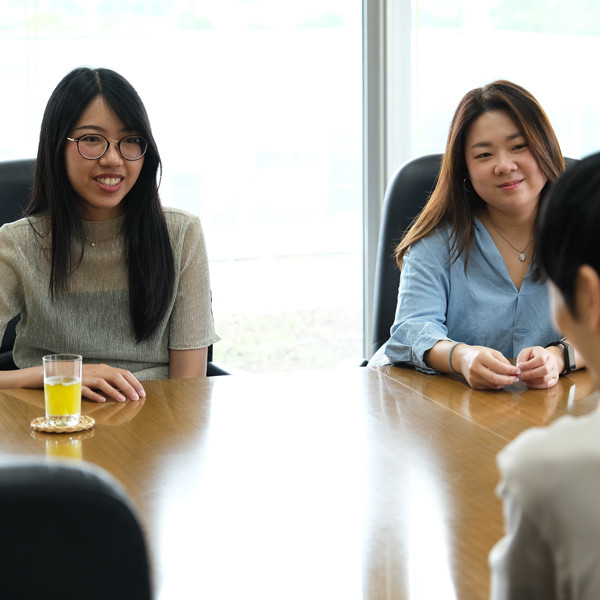

As societal demands become increasingly diverse, how should academic inquiry at the university level be linked to the building of a prosperous society? In this discussion, we welcomed graduates who are active on the front lines in Thailand to discuss the nature of “advanced expertise” that contributes to solving real-world challenges, as well as tips for building careers in this rapidly changing era. From the perspectives of alumni, the university president, and current students, we look ahead to the role and potential that educational institutions should fulfill in the future.
-
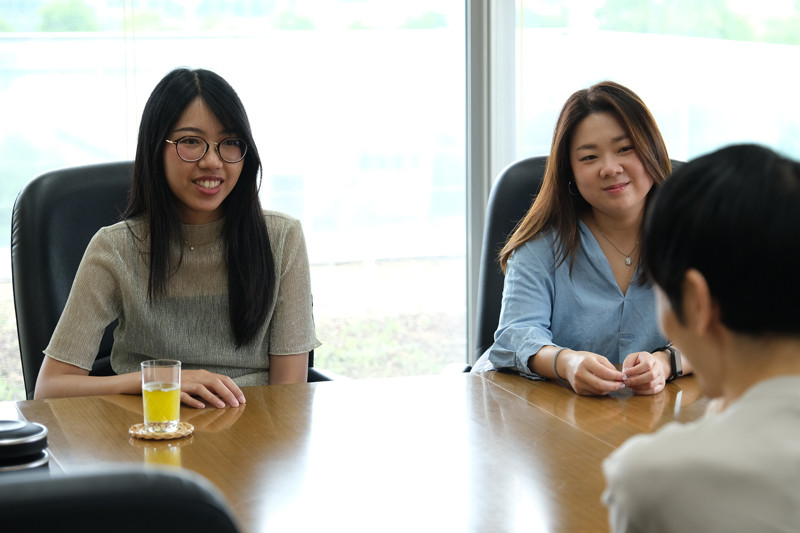
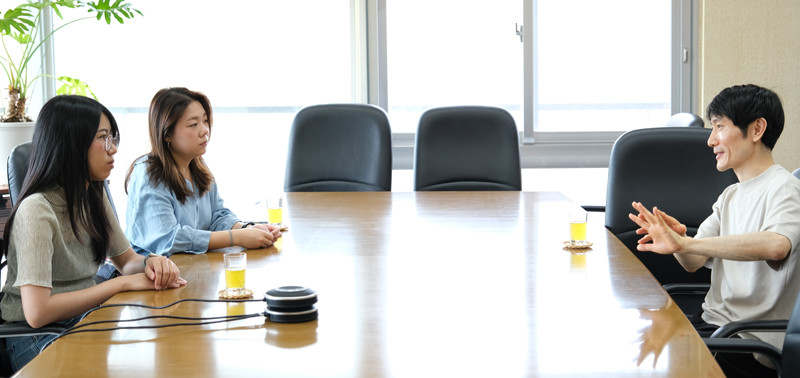
Guests: Ms. Won (from Thailand, graduated from the School of International and Area Studies in March 2020), Ms. Senmai (from Thailand, graduated from the School of International and Area Studies in March 2020)
-
Discussion Partners: Part 1: President Haruna; Part 2: Chamodi (from Sri Lanka, 3rd-year student, School of Japan Studies)
[Part 1] Graduates × President: Specialized Education Contributing to Solving Real-World Challenges
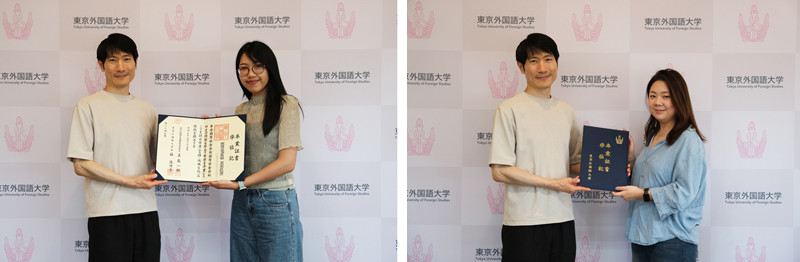
Haruna Welcome back, Won and Senmai! Today, I would like to hear your perspectives on the future of the university, as you are both active in the real world. Currently, Japanese universities are facing the major challenge of a declining birthrate. It is projected that by 2040, the number of students will decrease by approximately 27% from current levels due to the declining birthrate, and it is anticipated that our university will also be forced to reduce undergraduate enrollment quotas. At the same time, there is an expectation to expand the education of professionals capable of tackling the complex challenges of modern society, and we intend to expand specialized education that contributes to solving real-world problems. First, could you both tell us how you have spent your time since graduating from our university?
Won I studied Japanese history and philosophy at the School of International and Area Studies at Tokyo University of Foreign Studies and graduated in 2020. I was unable to attend the graduation ceremony due to the COVID-19 situation. I had to rush back to Thailand before the airports were closed. After graduation, I returned to my home country of Thailand and started working. However, as I built my career in the field of human rights and development, I keenly realized that in order to effectively protect people’s rights, I needed a deep understanding of Thailand’s domestic laws, which form the foundation for such protection. For that reason, I went back to study law at Thammasat University in Thailand and earned a bachelor’s degree.
Haruna Why did you choose to re-enroll in an undergraduate program rather than pursue a graduate degree?
Won In Thailand, pursuing a professional legal career, such as becoming a lawyer, prosecutor, or judge,
requires a bachelor’s degree in law. Since it is not possible to begin with a master’s program for this career path,
I decided to earn a second bachelor’s degree at Thammasat University in my home country. I studied there for three years in a program designed for working professionals. Since this program was intended for working adults who already held other degrees, I was exempt from general education courses like mathematics and English, allowing me to complete the program in three years instead of the usual four. The atmosphere of this program was very unique. The age range of the students was extremely broad, spanning from people in their 20s like myself to those in their 50s. I even sat side by side with people who already held two master’s degrees or had earned a PhD. Their backgrounds were also diverse: some were aiming for a career change into a completely different field, while others, such as accountants, were attending to learn the law directly relevant to their work. In this way, the environment of learning alongside such a diverse group of professionals, all driven by a clear sense of purpose, was incredibly stimulating. I am currently applying that knowledge in my work at a public organization, but I also plan to pursue a master’s degree in the future to further deepen my expertise. My goal is not merely to acquire knowledge, but to contribute to “Social Change”—using my legal knowledge as a tool to make society a better place.
Haruna That is very interesting. I feel that cases like yours, where individuals enter the workforce and then build new expertise of their own volition, represent one of the models universities should aim for in the future. Our university’s graduate school already boasts an excellent educational hub: the Peace and Conflict Studies (PCS) course/program. Launched in 2004, this interdisciplinary program aims to train professionals with expertise in peacebuilding and global issues, and it welcomes a diverse student body from around the world. Moving forward, graduate schools must look beyond simply training traditional academic researchers and university faculty; they must also focus on preparing highly skilled professionals who can immediately contribute on the front lines of society. Therefore, education directly linked to practical careers is essential for graduate schools, and programs like PCS—which tackle issues in modern society with a critical approach—can truly be considered pioneers in this regard.
Senmai I majored in International Economics at Tokyo University of Foreign Studies and graduated in 2020. Studying economics at university was a tremendous asset, as it gave me a perspective that allowed me to grasp the big picture of capitalist society. However, as I began working in the real world, I developed a strong desire not only to pursue profit but also to value deep empathy for people and a strong sense of ethics. Consequently, I decided to pursue a master’s degree in psychology—a completely different field—at a graduate school in the UK (Northampton). I currently work as a business coordinator at a Japanese energy-related company in Thailand. The essence of my job is to connect many people in different roles, such as engineers, partner companies, and clients. The insights I gained from studying psychology in graduate school are proving extremely useful in my current role as “soft skills” that allow me to accurately read others’ intentions and determine the best approach. Furthermore, since joining my current company, I have learned specialized knowledge—such as that of an engineer—from scratch, and I am driving business forward by combining my expertise in economics, psychology, and technology.
Haruna So you had a pretty clear vision of your future.
Senmai I am working for the future. I’m currently in the energy industry, and this sector has a very long-term goal: achieving carbon neutrality (net zero) by 2050. Japan has also pledged to reach net zero by 2050, so going forward, regulations regarding the introduction of a carbon tax and investments by NEDO (New Energy and Industrial Technology Development Organization) and the Ministry of Economy, Trade and Industry (METI) will likely become even stricter. When that happens, companies will have no choice but to utilize carbon credits to offset their emissions. The specialized knowledge required for this—such as calculating emissions and handling credit registration procedures—is a long-term field that will be in demand for a very long time to come. My career will be closely intertwined with the processes that support this future infrastructure.
Haruna Did you not aim to earn a Ph.D.?
Senmai If I had wanted to build a career as a professional in the field of psychology—such as a counselor or psychologist—I would have had to embark on a very long journey involving further research, practical training, and obtaining qualifications. However, I studied economics because I liked money. I just wanted to get out into the real world as soon as possible and start earning my own money. Ironically, job market are more interested in the fact that you have a Master’s Degree (MA) rather that what you have actually learnt from the course. And I’ve been able to build a career path that suits me just fine. Now, I find it rewarding to work on the front lines of business while applying specialized knowledge—like that of an engineer, a field outside my original expertise—in the field.
Won In Thailand, academic credentials are highly valued. Yet in fields like development and human rights, where the work involves tackling real-world societal challenges, professional credibility also depends on a more practical question: "How will you apply the academic knowledge you gained there in practice, and how will you use it to contribute to meaningful social change?" For example, I decided to study law again in Thailand after graduation because I was convinced that a deep understanding of domestic law—the foundation for protecting people’s rights—was essential. It is crucial that such learning becomes a “tool” for improving society, rather than merely the acquisition of knowledge.
Social change is never something that can be achieved in a short period of time. It is a “long game” that requires a commitment spanning 10, 20, or even 30 years. Just as Japan once held strong, entrenched views on certain issues but has since changed, or as same-sex marriage was legalized in Thailand after years of activism, history changes as long as many people continue to take action.Therefore, when choosing a university in the future, especially for a master’s program, the most important consideration should be whether the advanced education it offers will equip students to address pressing real-world challenges, apply their academic knowledge in practice, and contribute meaningfully to movements for social change as professionals after graduation. I believe that universities of the future will be expected to do more than simply grant degrees; they must demonstrate concrete expertise and show students a path to making an impact on society.
Haruna You are absolutely right. While it may be difficult to change individual mindsets immediately, I, too, believe that the introduction of new systems and standards will alter corporate behavior, and that these changes, when accumulated, will lead to the transformation of society as a whole. This is precisely why we are striving to provide more specialized education in our graduate programs. Moving forward, graduate schools must maintain their role as venues for academic study aimed at training researchers, while simultaneously strengthening their function as providers of advanced practical education for professionals active on the front lines of the real world. Specifically, I hope to increase opportunities for students to interact directly with professionals in the field and tackle societal challenges head-on through programs such as internships and PBL (Project-Based Learning) in collaboration with companies and external organizations.
In doing so, we aim not merely to confer degrees, but to clearly present the specific expertise needed to thrive in society, along with a clear “pathway” to future careers. I am once again convinced that this is the primary objective behind our university’s efforts to expand and evolve our graduate programs, and that it represents a crucial role entrusted to universities in the future. Graduates like you, driven by a shared sense of purpose, will act as “vital pillars supporting society” in your respective fields and eventually bring about significant change in society. I am once again convinced that providing the specialized knowledge that serves as a reliable tool for this purpose is a crucial role for our university moving forward.
[Part 2] Graduates × Current Students: Tips for Connecting Japan and Your Home Country and Working in a Way That Fits You
Chamodi I am a student in the School of Japan Studies, which was newly established in 2019. I hope to study Japanese language education in greater depth in the future. Currently, I work part-time at a company in Japan that provides support for international students, and in the future, I hope to work for a company that bridges the gap between Japan and my home country, Sri Lanka. I would like to ask the seniors: To what extent does your major at university influence your future career? Also, should I acquire specialized knowledge, such as IT skills, while I am still a student?
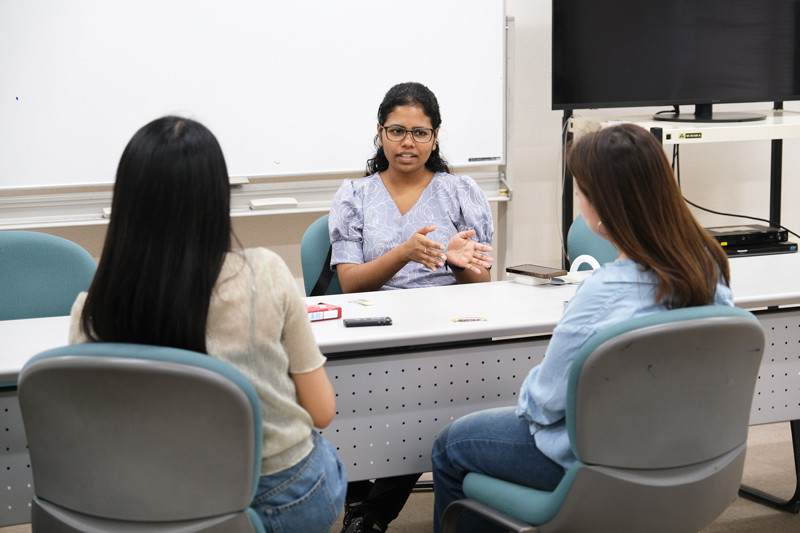
Senmai You can generally expect that about 30% to 40% of what you learn in college will be directly applicable to your job. I majored in International Economics when I graduated, but my first job was at a logistics company, and now I work in the energy industry. The important thing is that you don’t need to worry even if your major doesn’t match your job. That’s because, no matter what job you take, everyone starts from scratch when they join a company. In case you are concerned about higher demand for IT skills, Microsoft Office skills (Word, PowerPoint, Excel, etc.), we’re now in an era where you can integrate AI into your work and learn from that, so you don’t need to be perfect. Instead, when choosing a job, please make “your own growth” your top priority. There are many factors when considering choosing a job; like salary, location, or job descriptions, but since you’re joining the company with no prior experience, the key to building your future career is first learning new things in that environment and adding value to yourself.
Won When considering how your major might influence your career path, I strongly recommend that you gain experience through internships or part-time jobs at companies while you’re still a student. Experiencing the actual workplace firsthand will give you the insight you need to determine whether the industry’s culture and work style suit you, or whether you can develop an interest in that field. We didn’t do internships during our student days, but looking back now, we feel that seeing various workplaces while we were young was extremely beneficial in broadening our future options.
Chamodi I’m also interested in a career in interpreting, but is language proficiency alone sufficient?
Senmai Interpreting is a wonderful skill, but in my personal opinion, I feel that it’s not enough on its own. AI will continue to evolve in the future. Even if it won’t completely replace human interpreters 100%, many relatively simple interpreting tasks will likely be taken over by AI. Therefore, rather than making interpreting your “only job,” I think it’s best to treat it as one skill while also acquiring other “hard skills” and “soft skills.”
Won Once you enter the job market, you’ll realize there are so many people who can speak foreign languages. I myself speak three or four languages, and there are plenty of people out there who speak even more. Especially when you’re constantly competing with people who are as fluent as native speakers, simply being able to “communicate” might not be enough to survive as a professional. In the coming era, the demand is for “specialists,” not “jack-of-all-trades” generalists. Hone technical strengths in specific fields—such as project management or technical knowledge in a particular industry—that no one can replace you in. By doing so, you’ll be able to thrive in any industry or field.
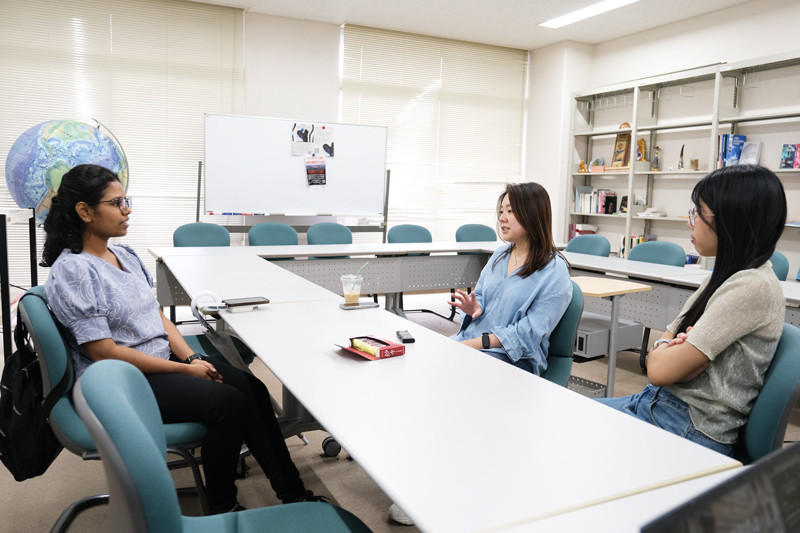
Chamodi The strength I would like to highlight is my ability to “connect people.” At my current part-time job, I serve as a sort of “mediator” or “bridge” between foreign nationals and Japanese companies. I’ve also served as an interpreter at several international events, and what I realized there is that interpreting isn’t simply a matter of replacing words with another language. Unless you deeply understand the country’s background, culture, and the many nuances behind the words, you cannot truly connect people. So, I’m currently honing my skills to foster harmony among people from different cultures, using my language abilities as a tool. For now, I believe this is my strongest asset.
Senmai That strength of “connecting people” is wonderful, but when job hunting, it would be good to present it in a more concrete way. Japanese companies place a high value on teamwork, so rather than simply saying “connecting people,” rephrasing it as “the ability to facilitate cross-cultural communication and ensure projects run smoothly as a team” will convey your value more clearly. Compared to us, who didn’t do a single internship during our student days, you are much better prepared right now. Even if you feel the environment you join isn’t a good fit for you, please have the confidence to move on to the next step without getting stuck there. Above all, it’s most important to believe in your own growth and keep taking on new challenges.
Won That’s right. The experiences you’re gaining now in interpreting and supporting international clients may seem like a collection of disparate skills at first glance. However, as I’ve realized through my work in project management, all of your daily experiences—from coordination to report writing—will inevitably come together like pieces of a puzzle in the future. No experience is wasted. Please continue on your current path with confidence, working toward your goal of connecting Sri Lanka and Japan.
Chamodi Thank you very much. Hearing advice from my seniors has cleared up my vision—I now have a clearer idea of how to articulate my experiences and connect them to my career. First, I want to believe in my strengths, gain experience in as many different settings as possible, and discover the unique form of “bridge” that only I can build.
本記事に関するお問い合わせ先: 広報・社会連携課 広報係 koho[at]tufs.ac.jp([at]を@に変えて送信ください)