

宮本佳和特任研究員がイタリアのパヴィア大学で開催されたイタリア・アフリカ学会(Associazione per gli Studi Africani in Italia: ASAI)の学術大会で発表し、研究者らと交流しました。
イタリア・アフリカ学会は、2010年(法的には2011年)に設立された、イタリア国内のアフリカ研究者を結ぶ全国的な学術組織です。ヨーロッパのアフリカ研究センターのネットワークであるAEGIS(Africa-Europe Group for Interdisciplinary Studies)のメンバーでもあり、2年に一度、イタリア国内の大学で学術大会を開催しています。
学術大会にはテーマが設定されており、今年は「Africa and Its Waters: Flows, Fates and Frameworks」でした。33のパネルが組まれ、2026年7月1日から3日までの3日間にわたり、イタリア語と英語で学際的な発表が行われました。
◆日時:2026年7月3日(金)
◆場所:パヴィア大学(イタリア)
◆演題:Haunted Harbour: Hydrogen Development and Genocide Memory on Namibia's Southern Coast
◆講師: 宮本佳和(東京外国語大学現代アフリカ地域研究センター)
◆要旨:This paper examines how contemporary green hydrogen development on Namibia's southern coast unfolds within landscapes profoundly shaped by colonial genocide and its afterlives. Focusing on Lüderitz (Kakoverua, ǃNami≠Nüs) and its surrounding port and coastal infrastructures, the paper explores how hydrogen projects promoted as symbols of a green, post-carbon future are layered onto sites historically marked by the incarceration, forced labour, and death of Ovaherero and Nama people during German colonial rule.
Drawing on anthropological fieldwork, archival research, and secondary sources such as documentary films, the paper traces the colonial genealogy of coastal infrastructures, including harbours, railways, and camps, and water systems, examines how these material legacies continue to shape contemporary development planning. While hydrogen imaginaries frame the coast as an "empty" or underutilised space suited for large-scale energy export, local residents, activists, and descendants of genocide survivors articulate these same landscapes as haunted, morally charged, and inseparable from histories of violence and dispossession.
The paper analyses how genocide memory is negotiated, muted, or strategically mobilised in public debates over hydrogen infrastructure, port expansion, and desalination projects. It shows how processes of green industrialisation risk reproducing colonial patterns of erasure by prioritising global climate and export agendas over local histories of suffering and claims for recognition and reparative justice. At the same time, the paper highlights moments in which memory work through commemoration, storytelling, and place-based activism interrupts dominant narratives of green progress.
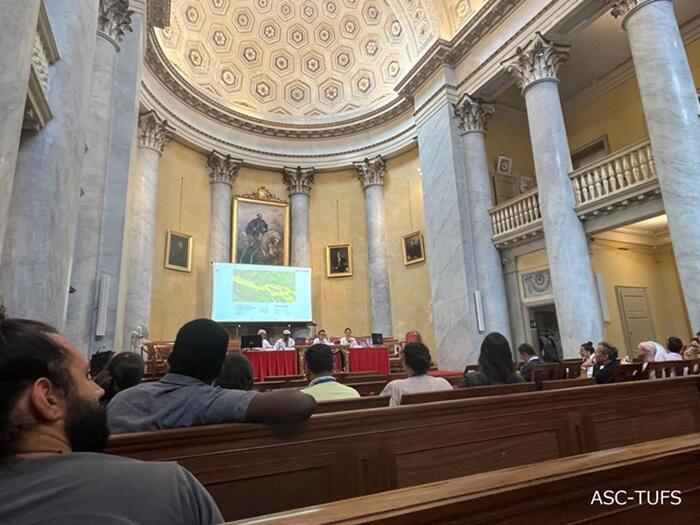
写真 大講堂での開会の挨拶の様子
パネルは、徳島大学の内藤直樹先生の企画のもとで組まれ、 科学研究費基盤研究B「エネルギーの人類学:アフリカの再エネ開発が地域社会に与える影響に関する比較研究」を受けて参加可能になりました。
また、宮本特任研究員は、大会の合間に、パヴィア大学歴史博物館とコスモス自然史博物館を訪問し、両博物館の学芸員から人骨の展示やイタリアの文脈における文化財返還の問題について詳細な説明を受けました。ナミビアで活発に議論される返還をめぐる議論と照らし合わせる機会ともなり、非常に有意義な滞在になりました。