

2026年度9月卒業式・学位記授与式を挙行
2026.09.18
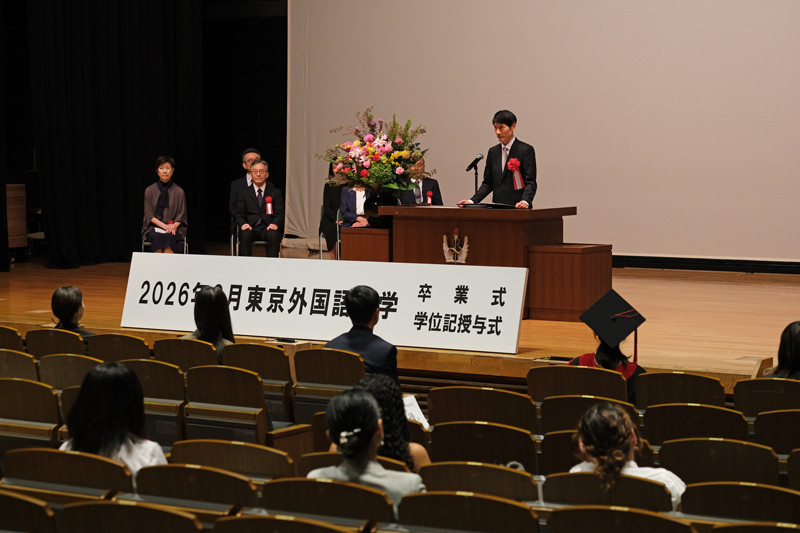
2026年9月18日(金)、2026(令和8)年度9月卒業式・学位記授与式を挙行し、学部学生11名(言語文化学部1名、国際社会学部9名、国際日本学部1名)、大学院総合国際学研究科博士前期課程21名、博士後期課程11名の計43名に卒業証書・学位記を授与しました。
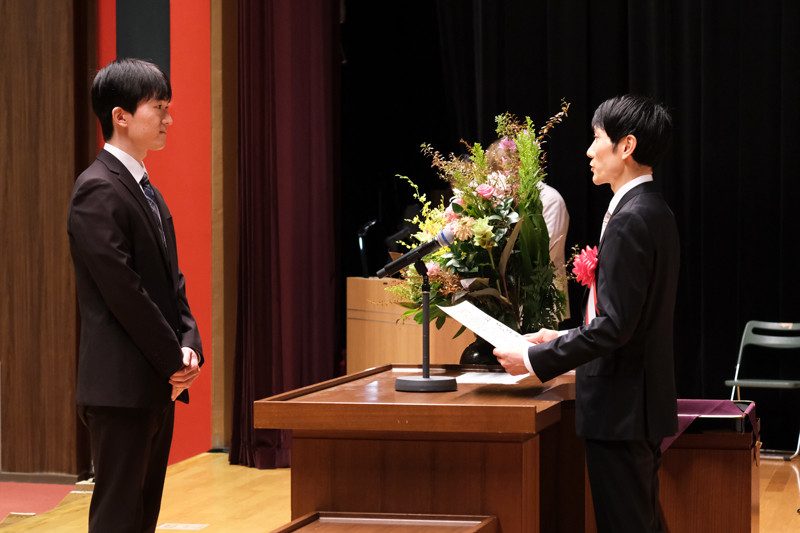
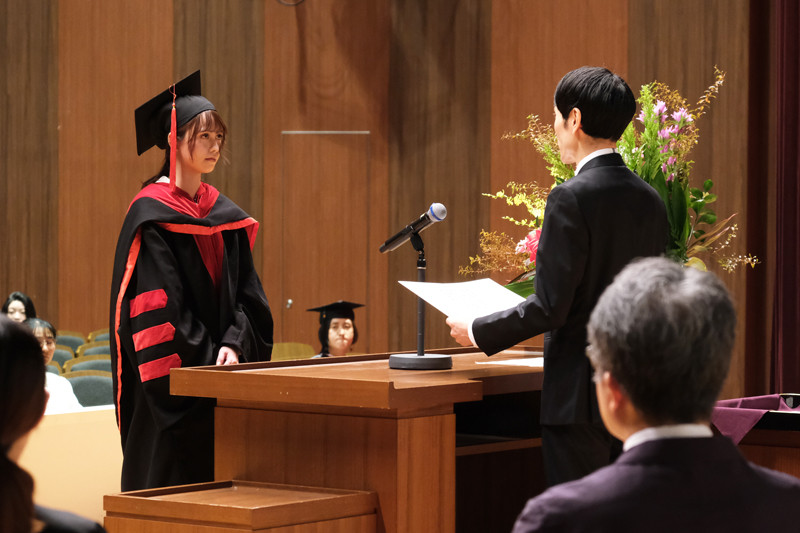
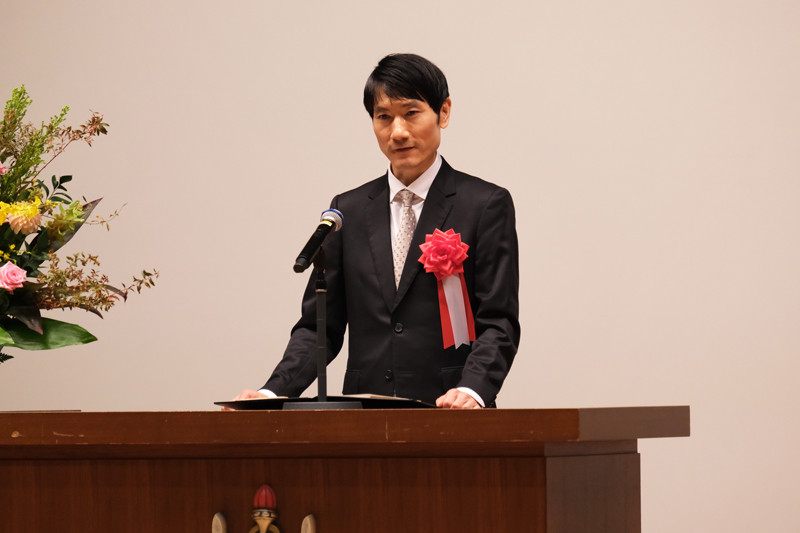
式では、春名展生学長から学位記が手渡され、学長式辞に続き、藤縄康弘大学院総合国際学研究科長から祝辞が述べられました。
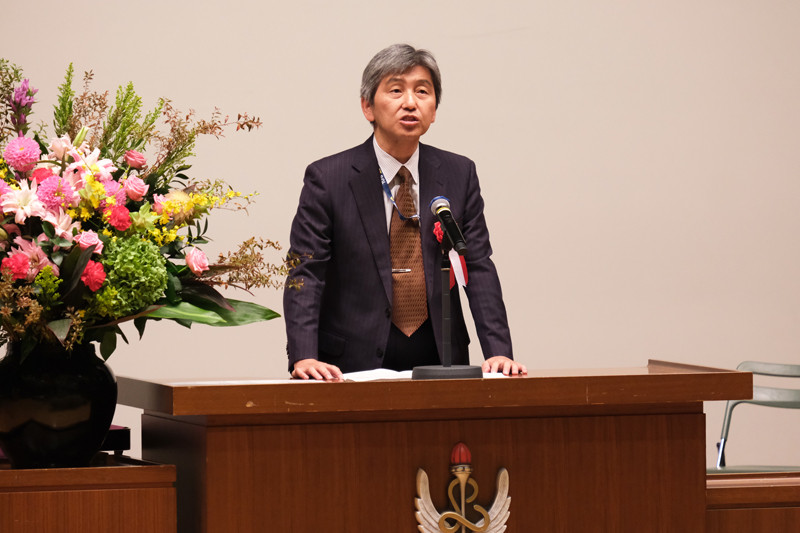
学長式辞
Today we have 43 students graduating from Tokyo University of Foreign Studies. 11 with a Bachelor of Arts, 21 with a Master of Arts, and 11 with a doctorate.
Congratulations! You worked long and hard to earn your degree. Through the years of studying, you must have acquired expertise in a certain field that will help you throughout your career. Let me give you one final message before you leave this campus and move on to the next stage of your life.
Please make use of your expertise as a bridge that connects you with people who have expertise in different fields, not as a wall that confines you in a narrow field.
The challenges we are confronting today cannot be solved solely by experts in a single field. Think of global warming and climate change. We are witnessing global heating effects daily nowadays. I believe you all remember the catastrophic glacier collapse at the Nepal-Tibet border this summer. Here in Tokyo, we had rain 22 days in a row from late August to yesterday. I guess the sun has come out today to celebrate your graduation.
To slow down and eventually terminate global warming, the common understanding is that we need to reduce the emissions of carbon dioxide. We need to lessen our dependence on energy derived from fossil fuels. We need mechanic devices which do not depend on fossil fuels nor emit CO2. We need technological innovation in that respect.
However, science technology alone cannot bring us to a world with less CO2 emissions. Developing energy-efficient but costly technologies will need fiscal measures backed by wide public support. And the implementation of new systems and devices will require changes in and even removal of long-standing and traditional practices in some cases.
The influence on our daily lives would be immense. Or, simply put, we need to change our ways of living. This is what an increasing number of scientists argue. In 2020, 5 scientists endorsed by 11,258 others from 153 countries published a joint statement entitled “World Scientists’ Warning of a Climate Emergency” in a journal named BioScience. The scientists argued that “The climate crisis is closely linked to excessive consumption of the wealthy lifestyle.” They also pointed out that “we have generally conducted business as usual and have largely failed to address this predicament” over the last 40 years. So, they claimed: “To secure a sustainable future, we must change how we live.”
How can we make that happen? How can we change the diverse ways of living all over the world to reduce the emissions of CO2?
There is plenty of room for experts in humanities and social sciences like you to make indispensable contributions in this phase. You have the skills and knowledge to coordinate the global mission with long-standing and traditional values.
You can bridge linguistic barriers with your communication skills. You can bridge conflicting values by cultivating a common ground with your profound understanding of a certain culture. You can even design new lifestyles or make inconvenient lifestyles appear enjoyable and attractive with your stock of cultural and artistic knowledge. And you can assist the institutionalization of such new lifestyles with your wide-ranging knowledge of social arrangements both domestic and international.
I suppose you all have concerns about the impact of AI on your career. But I believe that these communicative and creative roles cannot be replaced by AI easily.
Tackling climate change is a grandiose and overarching project. Even in more specific and narrowly defined collaborative projects, there is much room for experts in humanities and social sciences to make substantial contributions. That is what most of our graduates are engaged in. Think of some of the graduates you know. You will easily find ones collaborating with engineers, food experts, and medical doctors.
You already possess profound knowledge and sophisticated skills acquired through years of studying and training. The remaining question is how to make full use of your knowledge and skills in society. The degree you received today adds credibility to your expertise. It will enable you to collaborate with experts in other fields more easily.
On top of the certificate, I suggest that you equip yourself with flexibility and open-mindedness. Rigidity is required in disciplinary training, but flexibility is what you need to apply your expertise in the real world and to collaborate with other experts. Finally, you need to be open-minded not to miss various opportunities.
I think I told you everything I had to before sending you off to the next stage of your journey. I wish you all the best. さようなら!
2026.9.18
President, Tokyo University of Foreign Studies
HARUNA Nobuo