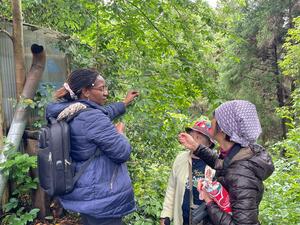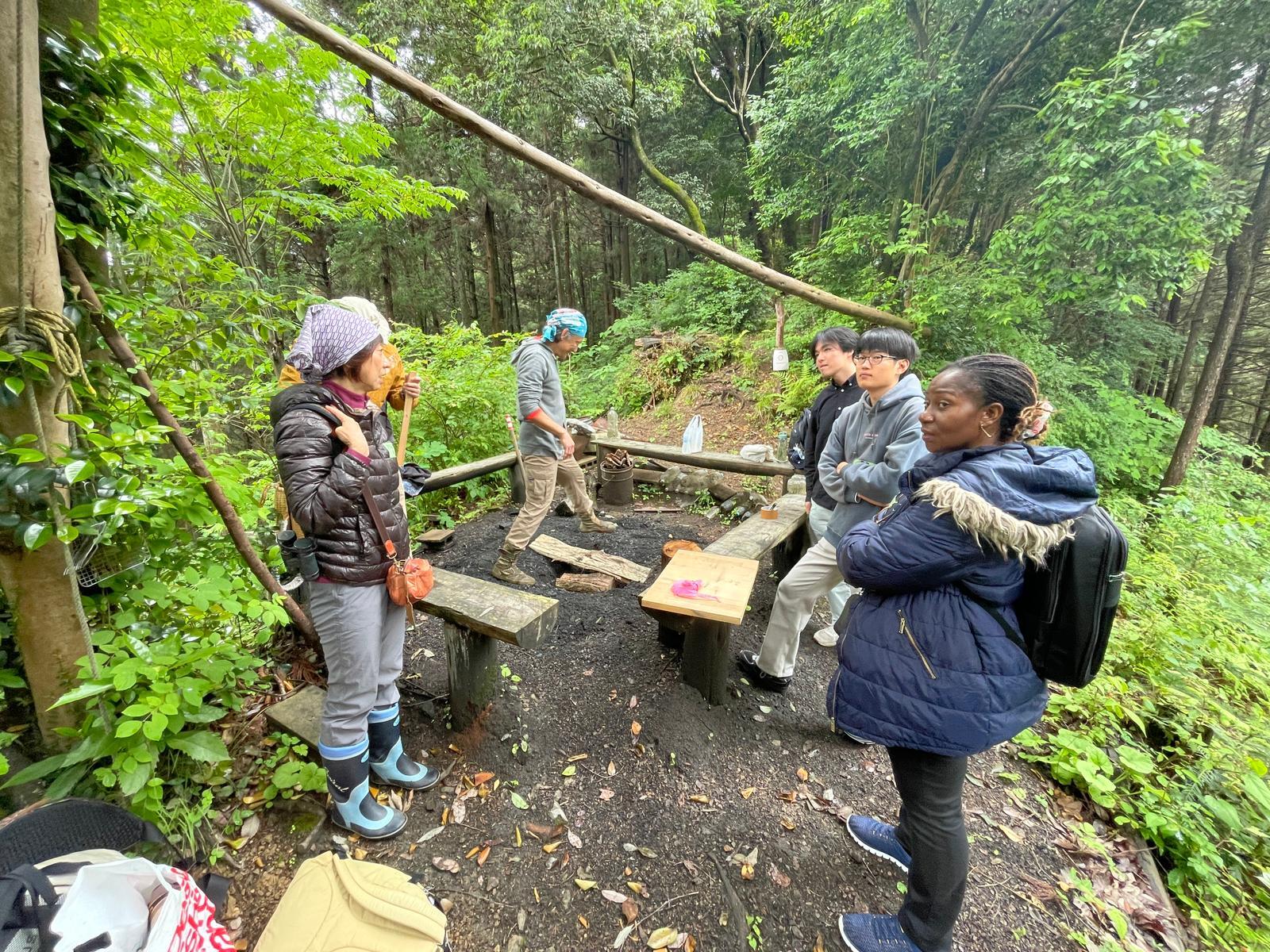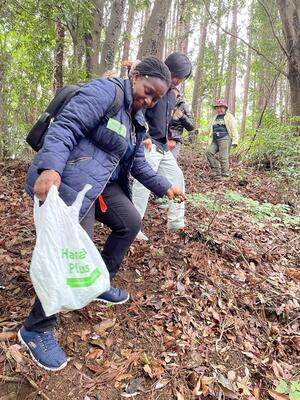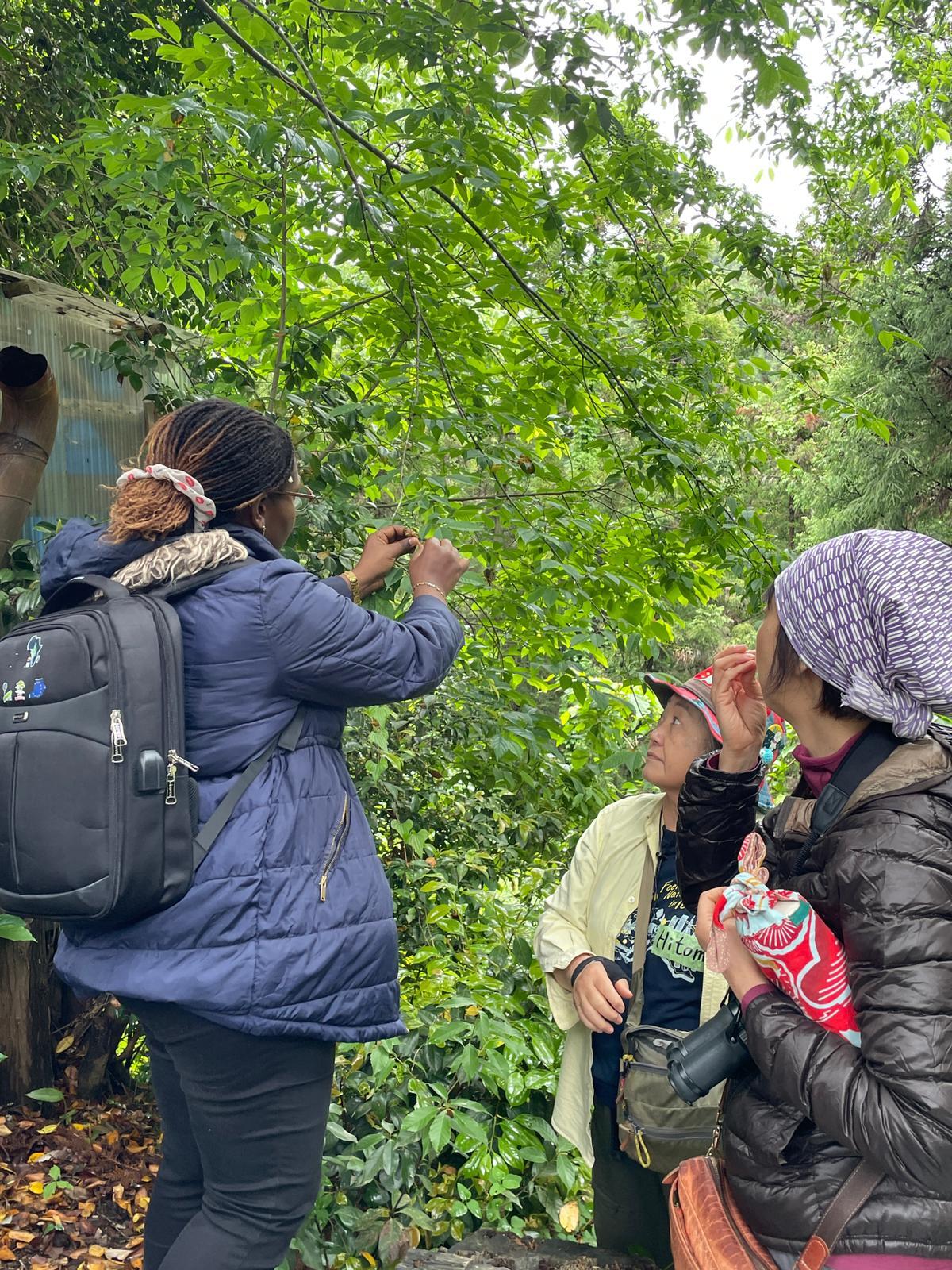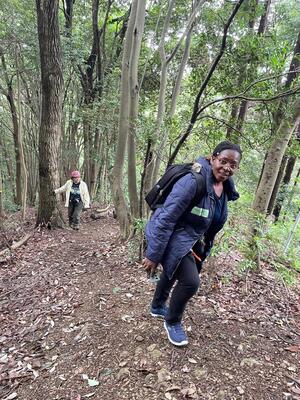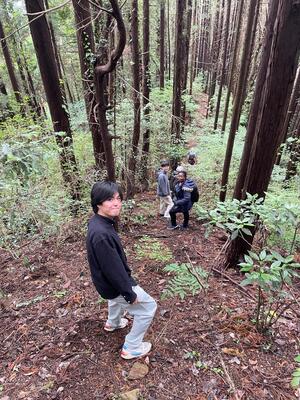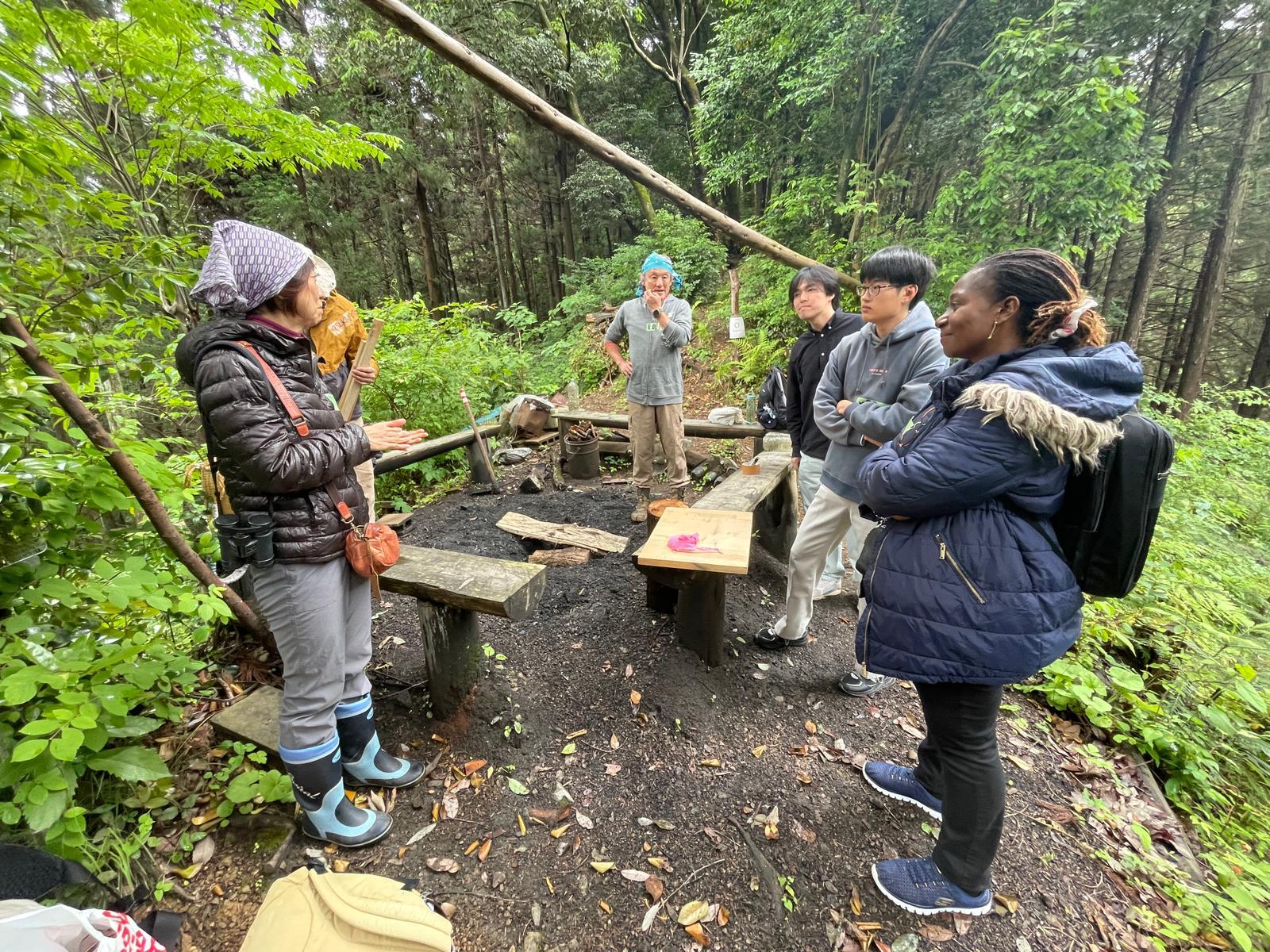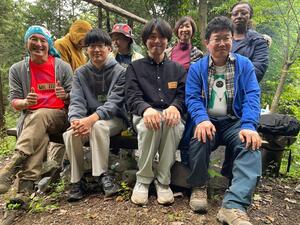
On May 23, 2026, our visiting associate professor, Dr. Marlène Ngansop, visited Mount Takao in Hachioji City. She participated in the activities of a forest volunteer group in which Prof. Makiko Sakai is involved, and explored both the forest management work sites and the surrounding woodland areas.
Dr. Marlène Ngansop has kindly shared a report on her visit. We invite you to read about her experience below.
A Day in the Takao Mountains by Dr.Marlène Ngansop
At the invitation of Professor Saikai Makiko, I had the pleasure of joining in a walk on Mount Takao, located in the suburbs of Tokyo, on Saturday, May 23, 2026. Professor Takanori Oishi and two students from the University of Tokyo's School of Foreign Studies, Yuto and Tasuku, agreed to join us.
The walk involved assisting the Gotansha Association teams with their forest management and maintenance activities in the Mount Takao forest, which focused primarily on clear-cutting and selective logging. Gotansha is a volunteer association that has been conducting forestry activities in this forest for 27 years. Although the forest is owned by the government, the association plays a vital role in its maintenance, management, and monitoring.
This visit was particularly enriching, as it gave me a better understanding of Japan's forest ecosystems, especially its mountain forests. The walk began around 11 a.m. and ended around 1 p.m. I was able to appreciate the diversity of the forest floor in this forest, which is dominated by Cryptomeria japonica and Chamaecyparis obtuse plantations.
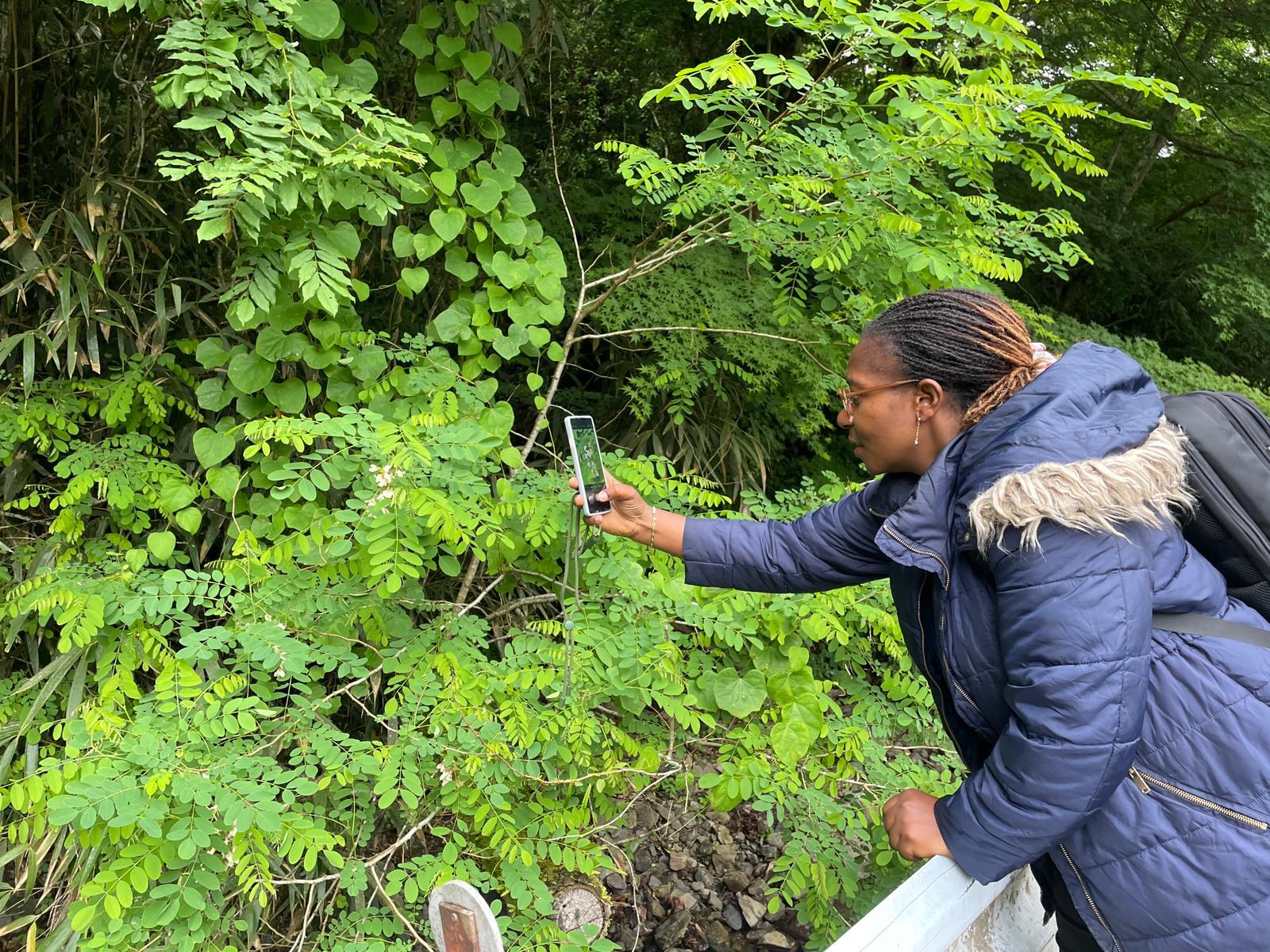
Among the understory species observed were Rubus hirsutus (Kusa-ichigo), a wild strawberry; Cardiocrinum cordatum (ubayuri), an edible vegetable consumed as Sansai; and Robinia viscosa, whose flowers are also edible. We also observed Helwingia japonica (Hanaikada), remarkable for the development of its flower buds and fruits directly on the leaves; Zanthoxylum piperitum (sansho); Zanthoxylum schinifolium (inu-zanshō); Smilax china (Sarutori-ibara), whose leaves are used to wrap rice and are also consumed as a vegetable; as well as Osmanthus heterophyllus, (Hiiragi), traditionally used to ward off evil spirits and the Christmas tree, Abies firma (Momi), an evergreen conifer, but different from those used in Cameroon as Christmas trees.
The identification of these plants was made easier by the association's members, who have in-depth knowledge of forest plants and their various uses, particularly for food and cultural purposes.
Finally, it is important to highlight the quality of the silvicultural work carried out by the association's members, which promotes the growth of healthy trees with good diameters while contributing to the conservation and enhancement of this forest ecosystem.