

Students in the Community Interpretation Research Seminar Engage with Fuchu Residents on the Theme of “Communication” Between Japan and the World
July 24, 2026
Every year, as part of their “internship,” students in the Community Interpretation Research Seminar of the Faculty of Language and Culture at our university organize “exchange events” on various themes in collaboration with Fuchu City and the Fuchu International Exchange Salon.
These exchange events, a collaborative project among the three parties, are primarily aimed at Fuchu residents—including foreign residents living in Fuchu City—and provide an opportunity to reflect broadly on multicultural coexistence through interaction with our university students.
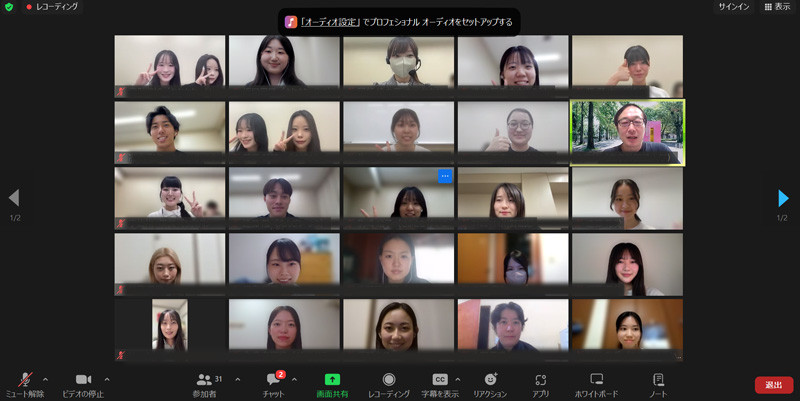
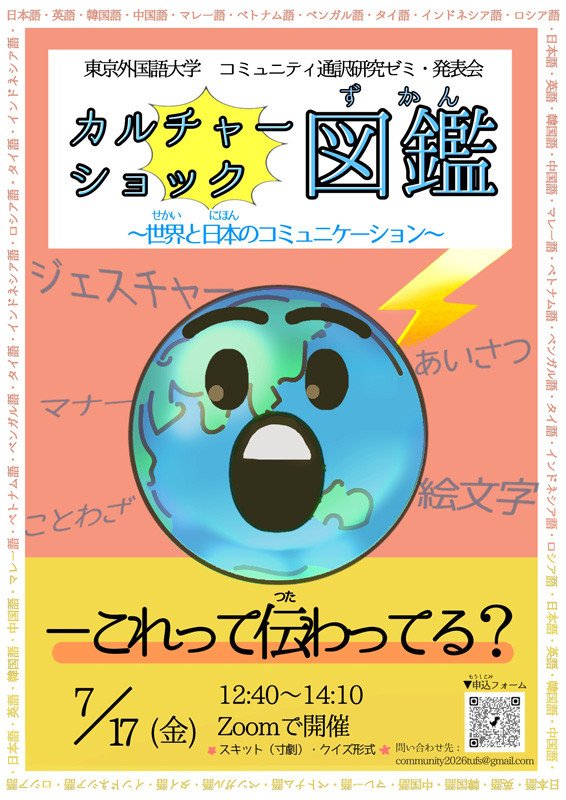
This year, the exchange event was held on Friday, July 17, 2026, under the title “Culture Shock Guide: Is This Getting Across? Communication in Japan and Around the World.”
On the day of the event, students used “Easy Japanese” to introduce and compare various communication practices from countries and regions where the languages they are studying are spoken—including the United States, Malaysia, Indonesia, Russia, India, South Korea, China, and Vietnam—with examples from Japan.
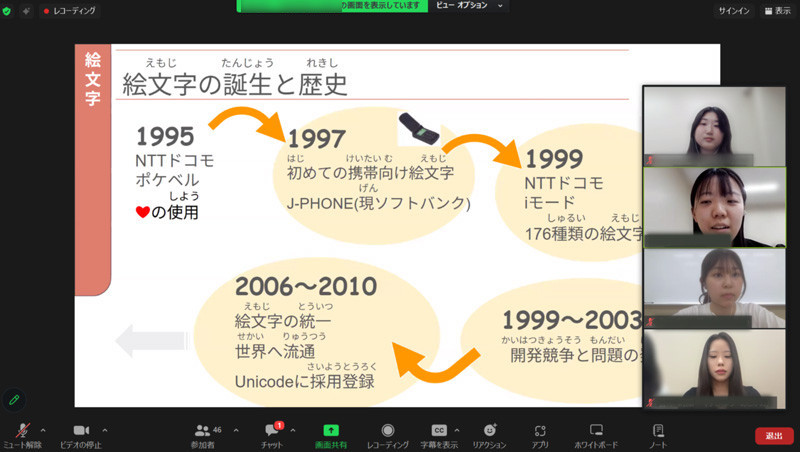
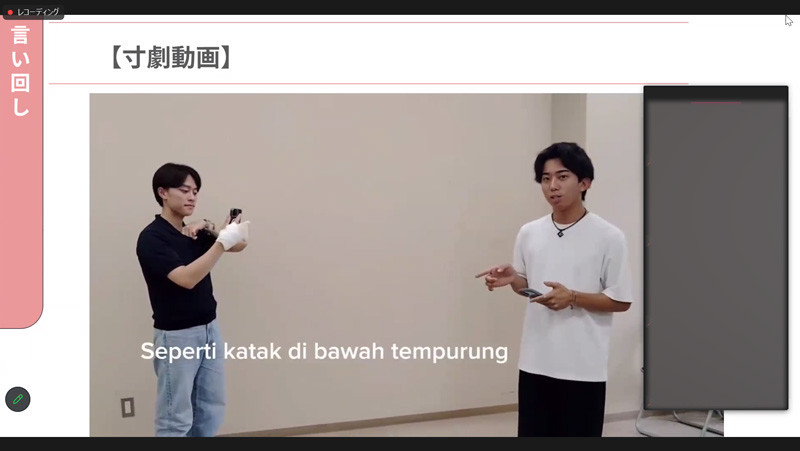
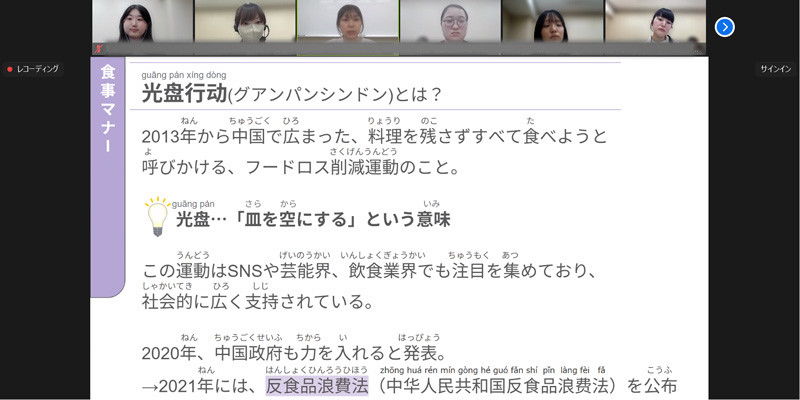
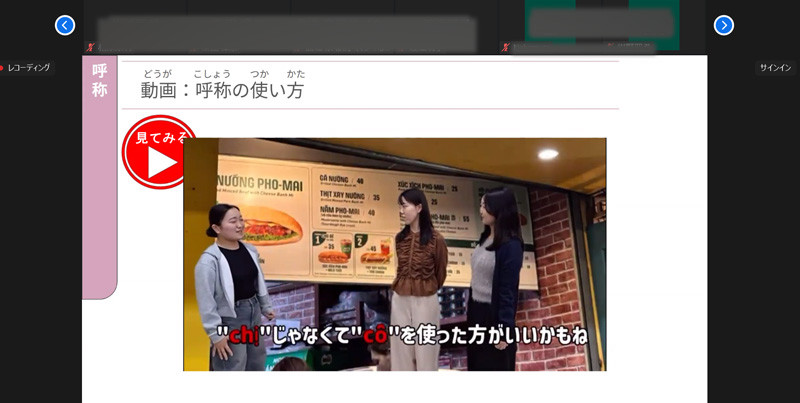
Presentations covered a wide range of topics, including “emojis,” “expressions related to animals,” “associations with colors and numbers,” “gestures,” “greetings,” “proverbs,” “expressions using body parts,” “dining etiquette,” and “titles and forms of address.” The event featured presentations that incorporated skits and quizzes, and by making full use of Zoom’s chat and reaction features, it fostered a lively atmosphere of exchange.
Below are comments from participating students.
Asagao Sugahara (3rd-year English major, School of Language and Culture Studies)
I would like to express my heartfelt gratitude to everyone at the Fuchu City Diversity Promotion Division, the Fuchu International Exchange Salon, and all the participants for their support in making this “Culture Shock Guide: Is This Getting Across? Communication Between the World and Japan” event possible.
This time, we took on the challenge of a new, participatory presentation format that combined skits, quizzes, and commentary. By focusing on the small “discrepancies” that arise between Japan and the rest of the world—such as the use of emojis, gestures, and the associations we have with colors and numbers—we were able to create a space for reflecting on cross-cultural communication. I am delighted that, as each seminar student contributed their own area of specialization and we engaged in repeated discussions, these diverse perspectives came together to form a single project. We hope we were able to share with all participants the realization that what is “taken for granted” varies depending on culture and region. Building on what we learned today, all of us in the Community Interpretation Research Seminar will continue to engage in activities that contribute to mutual understanding.
Yoshika Munakata (3rd-year Chinese major, School of Language and Culture Studies)
I would like to express my heartfelt gratitude to everyone who cooperated with and participated in this exchange event. While discussing “What are the barriers to achieving multicultural coexistence?” we concluded that “unspoken assumptions” in communication might be one of the causes, and we organized this event around that theme.
Our seminar includes students studying various languages and regions, and the fact that we were able to explore the content based on our respective real-life experiences added greater depth to this event. As we planned the event, we encountered numerous “unspoken assumptions” that even we, as seminar members, were unaware of, and it was a series of surprises. We would be delighted if the participants also made similar discoveries, and we hope this serves as an opportunity for them to reflect on whether what they take for granted applies to people from other cultures and regions.
(This text was translated by AI.)